Crochet and mathematics are meant to be
As a crocheter, you’ve probably noticed that crochet is closely related to mathematics. Most crocheters and knitters do math all the time. For example, they use mathematical formulas to create objects of a certain shape by increasing or decreasing the number of stitches (amigurumi, I’m looking at you!) or by using stitches of different heights.
We calculate all the time
Let’s take a circle as an example. If we want to make a flat circle, we need to ensure that it doesn’t curve, and this is where math can help us.
Each single crochet stitch can be thought of as a square measuring 1 × 1.
For the first round of stitches, we want to make a circle with a radius of 1. Therefore, the circumference will be 2π. In this case, we’ll take π ≈ 3 for simplicity, so in the first round we’ll have 6 stitches.
When we add the second round, the radius of the circle becomes 2, so we need 4π stitches in this round, which, using our approximation of π, is 12 stitches. In the next round, the circle has radius of 3, and the round has 18 stitches. So in each round we add 2π, or 6 more stitches. The number of stitches in each round increases linearly.
By applying formulas like these, you can crochet a sphere or even more complex shapes.
Even when we use a pattern that someone else designed, new challenges can appear. Patterns are usually created with a specific yarn thickness in mind, but luckily they also include a gauge, a 10 × 10 cm sample you can make to understand how your yarn compares to the designer’s yarn. Based on that sample, you can calculate the entire pattern for your own yarn type.
Feynman’s experience
People use mathematics in crochet and knitting sometimes without realizing it.
Richard Feynman, the great 20th century physicist, was sharing his memories about his student years. He was listening to girls talking in the cafeteria to “see if there was one intelligent word coming out”.
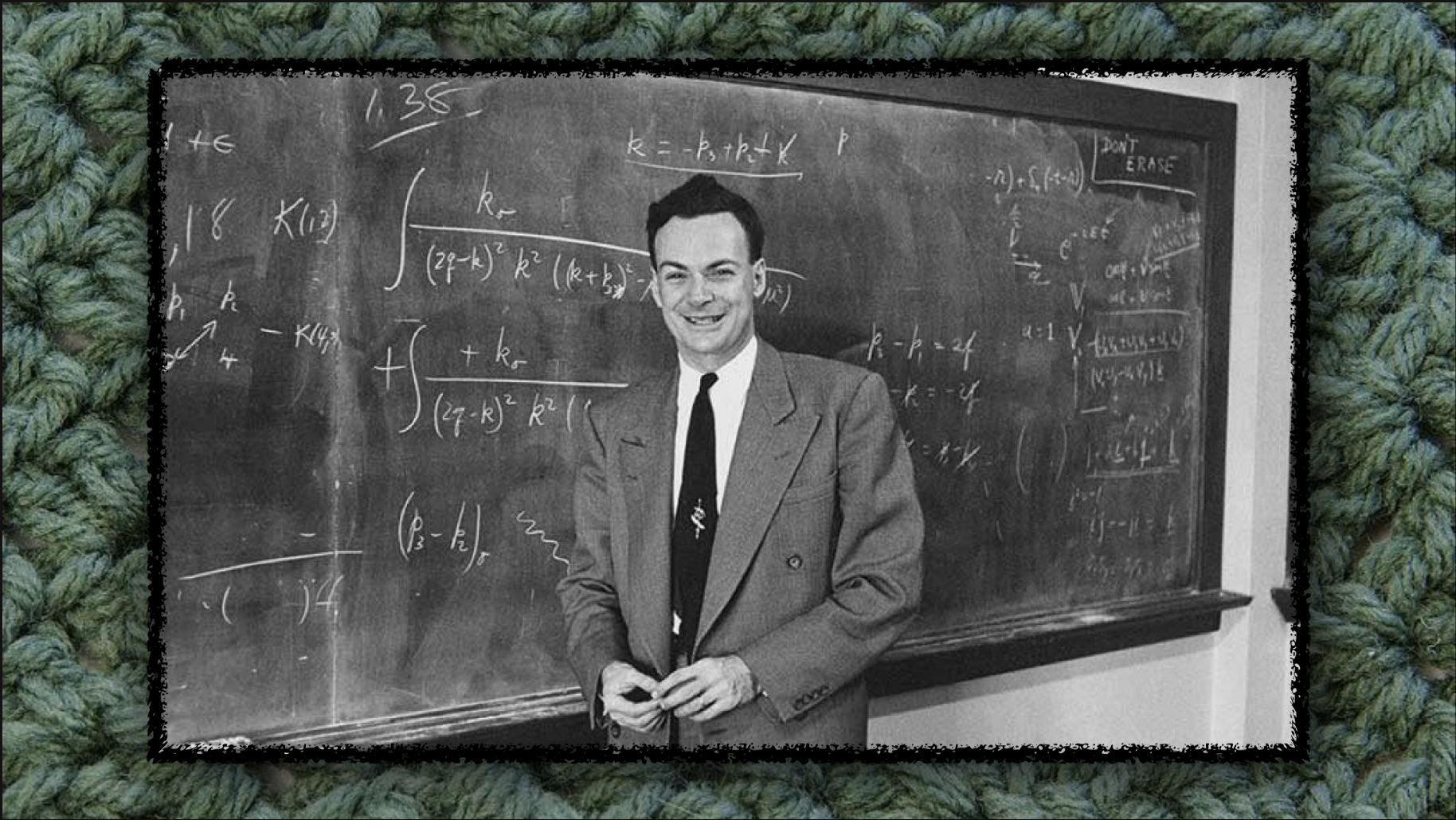
His memories:
I listened to a conversation between two girls, and one was explaining that if you want
to make a straight line, you see, you go over a certain number to the right for each row
you go up, that is, if you go over each time the same amount when you go up a row, you make
a straight line. A deep principle of analytic geometry! It went on.
I was rather amazed. I didn't realize the female mind was capable of understanding
analytic geometry.

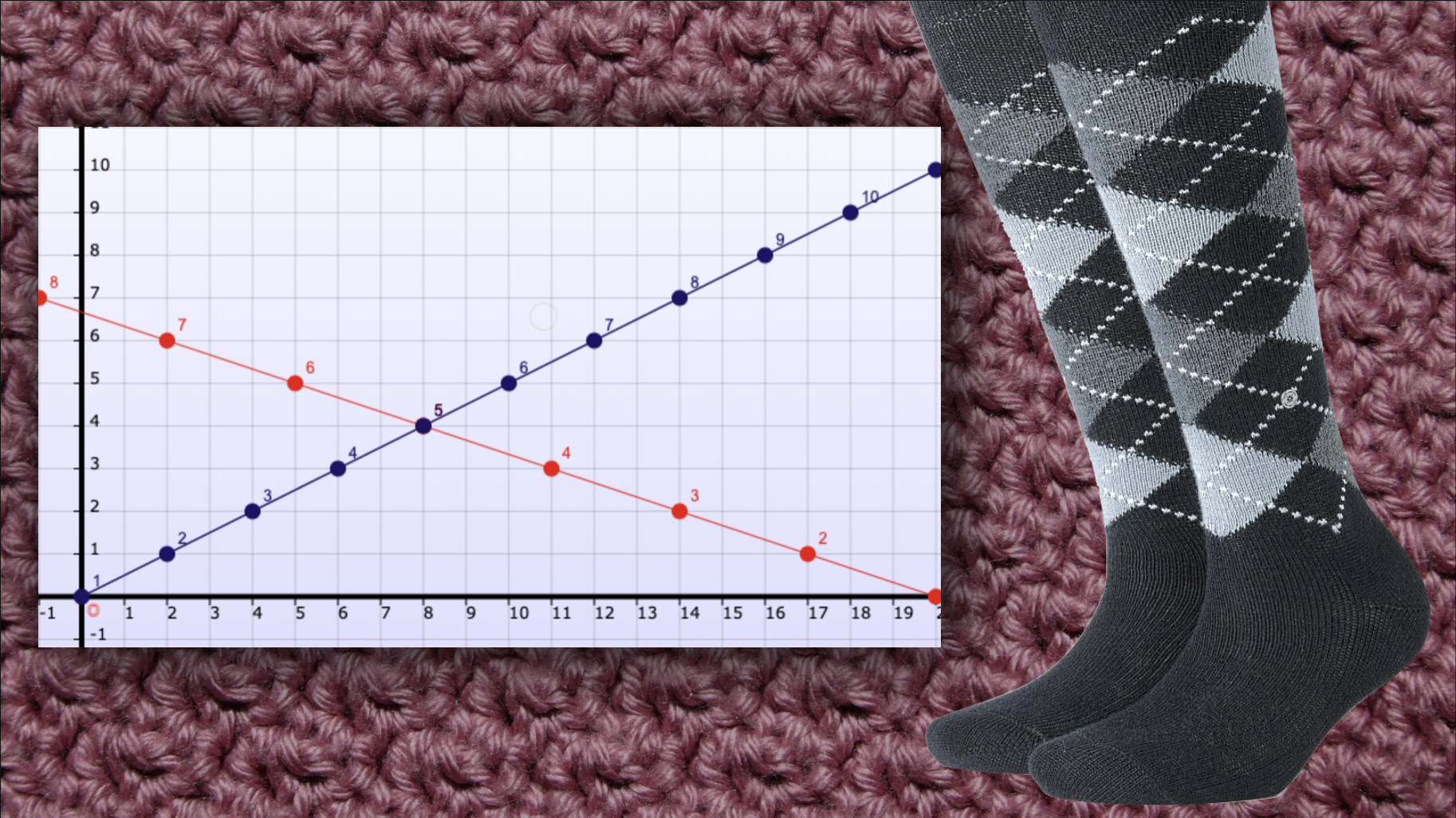
She went on and said, "Suppose you have another line coming in from the other side and
you want to figure out where they are going to intersect." Suppose on one line you go over
two to the right for every one you go up, and the other line goes over three to the left
for every one that it goes up, and they start twenty steps apart, etc. - I was flabbergasted.
She figured out where the intersection was! It turned out that one girl was explaining to the
other how to knit argyle socks.
Crochet helps mathematicians
Crochet has actually helped many people who teach and study mathematics.
Daina Taimiņa, a Latvian mathematician, shared her experience of studying hyperbolic geometry.
Hyperbolic geometry has a unique property: if you have a line and a point not on that line, you can draw many lines through that point that are parallel to the original line.
In contrast, in Euclidean geometry, exactly one line parallel to the original passes through a given point.
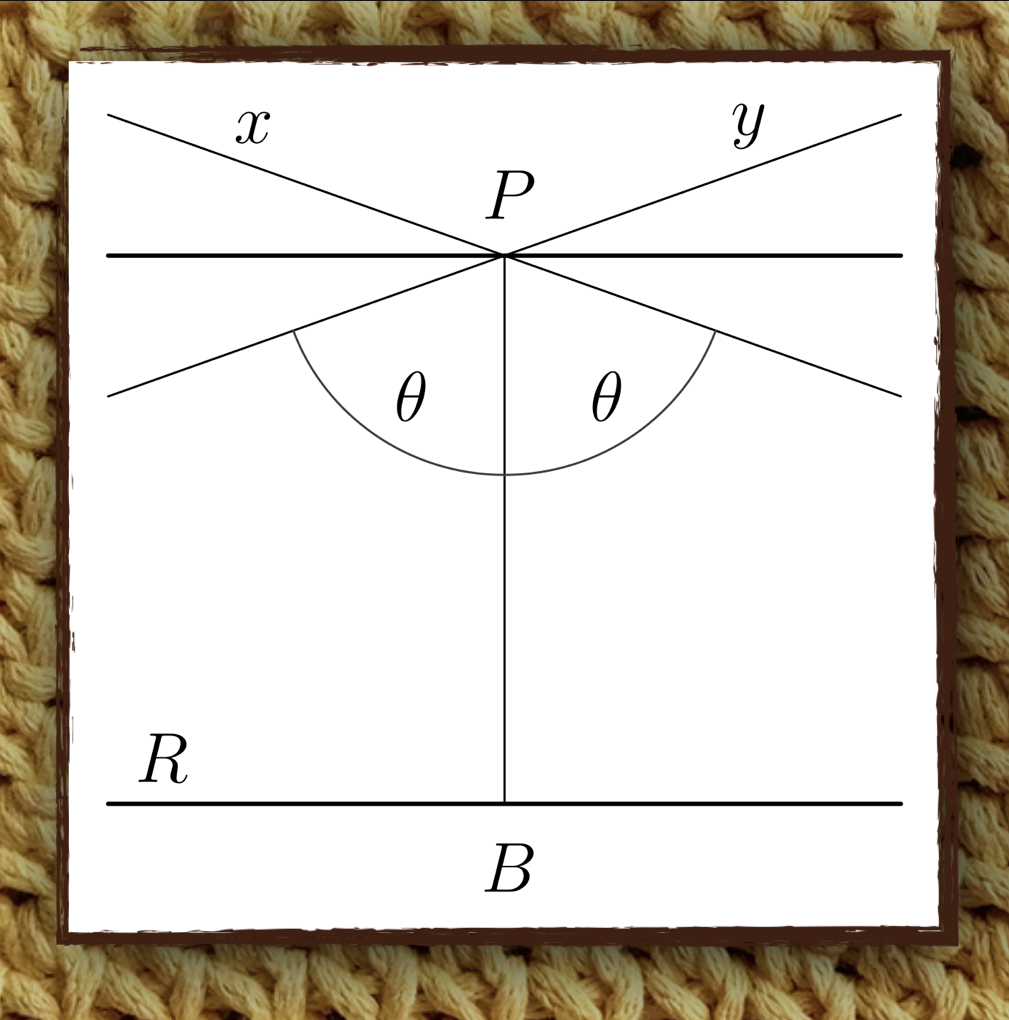
Daina explained that this concept is very hard to imagine. It feels counterintuitive - how can that be? It can’t be easily represented in two-dimensional space.
There had been attempts to visualize it with paper, but paper models were fragile and difficult to work with.
Since Daina also enjoys crocheting, she had the idea to crochet a model. With crochet, you can create any kind of surface by combining stitches differently, uniting two stitches into one, adding extra stitches, skipping stitches, or varying stitch size. Basically, crochet is your 3D printer.
Thanks to this approach, Daina was finally able to see how a hyperbolic plane was possible.
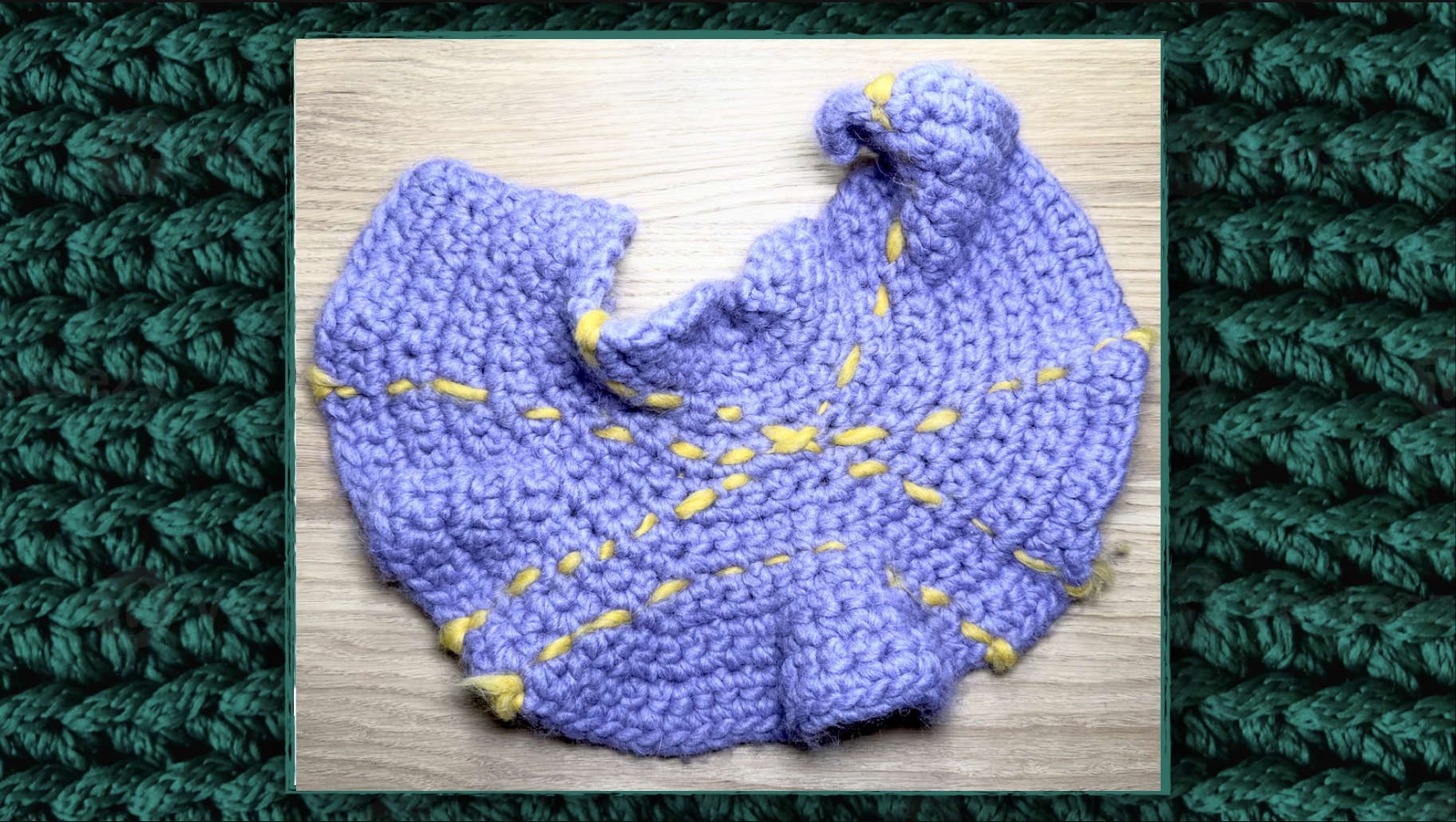
She became the university professor, and started bringing crochet models to the class to teach her students.
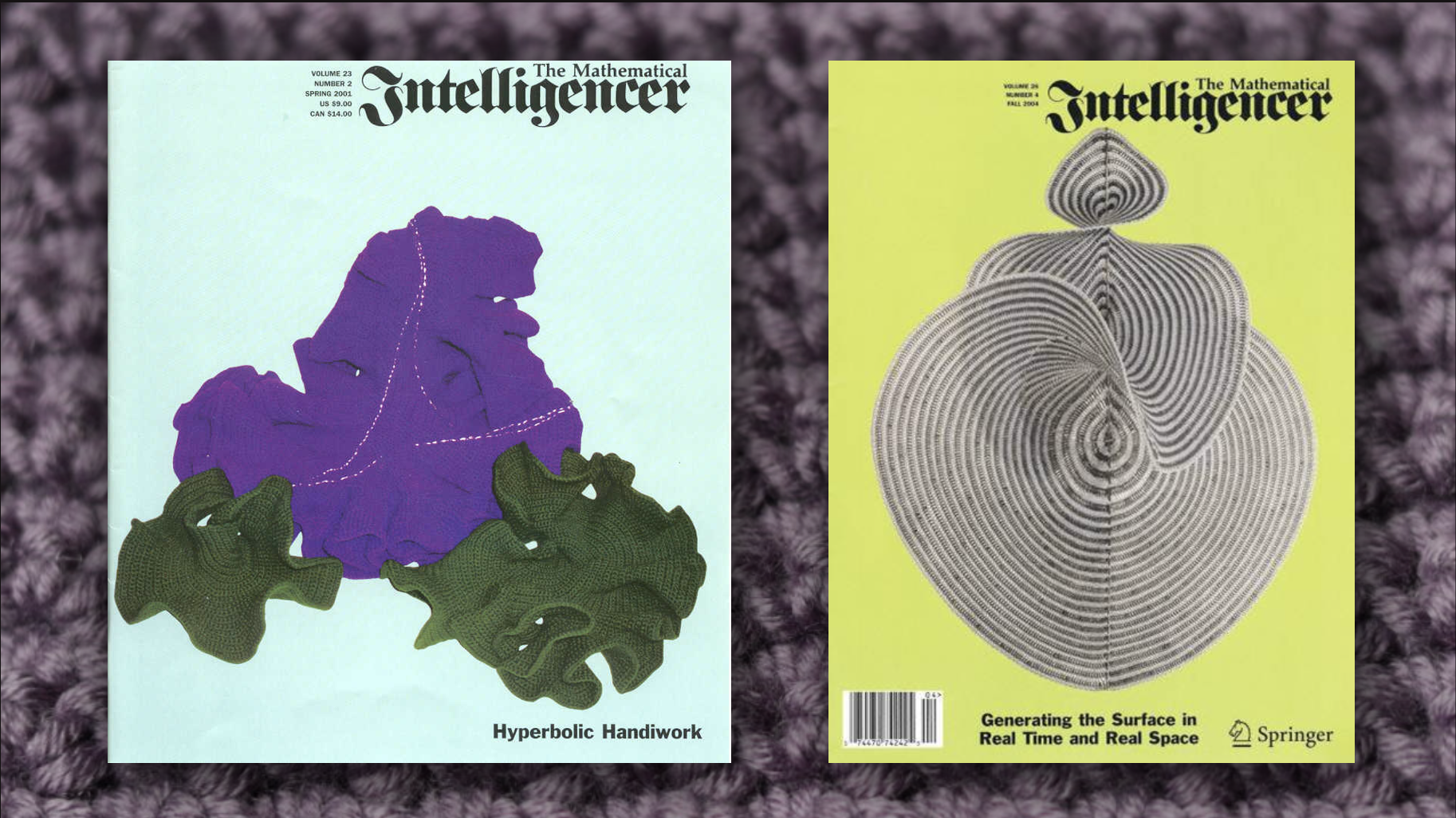
Her colleagues didn’t take it seriously at first. But it was a very successful idea. Some of these models got onto mathematical magazine covers. Other people started doing it. And these days crochet is used a lot to visualise the hyperbolic geometry.
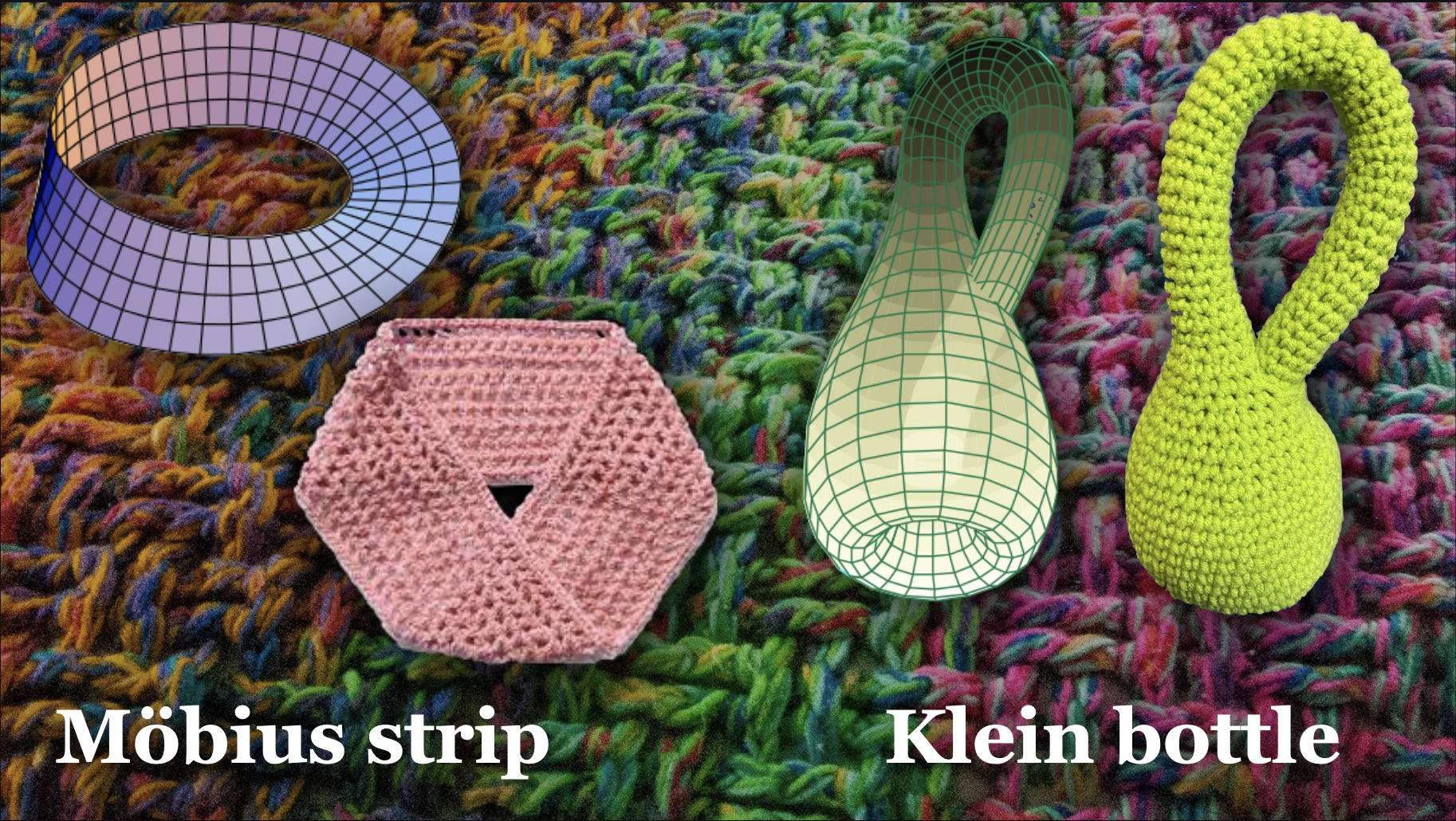
There are many other examples of things that can be easily visualised by crochet: Möbius strip (single surface), Klein bottle (single surface or non-orientable surface).
Conclusion
This was actually an internal “TED Talk” I once gave at my job. 🙂
The message was to experiment, try things together, connect unconnectable, look at things from different perspectives, overcome doubts and biases, and that will lead to discovering something new and magical.
By the way, my job has nothing to do with crochet or textile arts - I’m a software engineer.
As an engineer, I’ve noticed how crochet uses engineering principles and best practices all the time. Especially when it comes to designing and writing your own crochet patterns - it’s like writing code.
For example, clean code principles dictate that you shouldn’t repeat yourself (DRY). You want to introduce a piece of code and reuse it. How many times have you seen “repeat from * 3 more times”? Exactly.
When I was writing my own patterns, I kept asking myself questions like: should I specify whether to crochet into the front or back loop inside each stitch description, or in the pattern directions? I chose the latter, because stitch descriptions should remain clean and describe the stitches themselves, not how they are used in this particular design. Write clean code… or crochet, woman, I told myself.
I could keep going, but you get the point.
Crochet is more than just bending yarn in ways. It’s engineering. All the research, all the design principles, all the experimentation, everything applies the same way it does in any other field of engineering.
That’s what this blog is all about. Hope to see you back. 💛
